Northolt Drive, Mikar Business Park, Bolton BL3 6RE

Bus Services For Schools Procurement Explained
Bus services for schools need careful procurement because they affect pupil safety, attendance, inclusion, budgets and parent confidence every day. A good contract is not just about finding a vehicle with enough seats. It is about choosing a reliable operator, setting clear service standards, checking safeguarding arrangements and making sure the route works in real life, not just on a spreadsheet.
For school business managers, academy trusts, local authorities and governors, the buying process can feel a little like trying to plan a school play, sports day and inspection visit at the same time. There are rules to follow, routes to plan, costs to compare and safeguarding duties to consider. The aim is to make a fair, well recorded decision that gives pupils a safe and dependable journey.
Atlantic travel supports schools with dependable coach, bus and minibus transport across the UK, including executive vehicles, accessible options and experienced drivers. The right provider should make the process easier by helping you understand practical transport needs, vehicle suitability, journey planning and day to day service expectations. The points below explain how to plan, specify, evaluate and manage school transport with confidence.
What Are Bus Services For Schools?
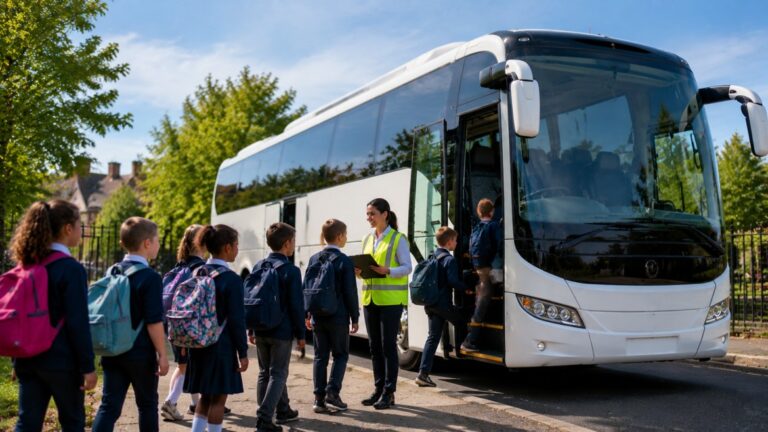
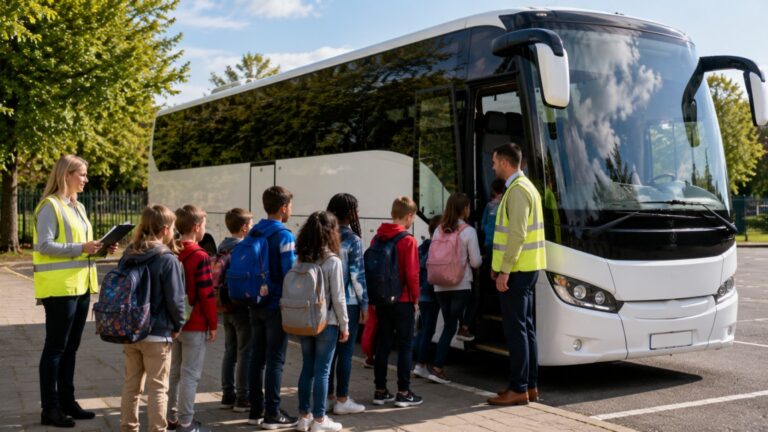
Bus services for schools are planned transport services used to move pupils safely between home, school, activities, educational visits and events. They can include dedicated school bus routes, hired coaches, minibuses, accessible vehicles, home to school transport and services arranged for sports fixtures, field trips or residential visits. Some schools need a daily fixed route, while others need flexible transport at certain times of the year.
There is an important difference between a dedicated school service and a scheduled public bus. A dedicated school service is usually planned around the school day, with agreed stops, clear passenger expectations and safeguarding controls. A public bus may be suitable for older pupils, but the school has less control over the route, other passengers, timings and capacity. For younger pupils, pupils with special educational needs and disabilities, often shortened to SEND, or sites with complex access needs, a dedicated service is often easier to manage.
Schools reviewing private bus services for schools should think about more than the daily journey. The specification should cover vehicle type, route timing, behaviour expectations, boarding points, safeguarding, communication and what happens if something goes wrong. Clear detail at the start prevents many problems later.
Why School Transport Procurement Quality Matters
Good school transport procurement protects pupils, budgets and the school’s reputation. A weak contract can lead to late arrivals, unclear responsibilities, unsuitable vehicles or poor reporting when incidents happen. A well planned contract gives everyone a shared understanding of what good service looks like. It also gives the school or trust a fair way to compare suppliers and manage performance after the contract is awarded.
Safety and safeguarding should sit at the centre of the process. Drivers and passenger assistants must be suitable for the role, understand professional boundaries and know how to report concerns. Vehicles should be maintained, inspected and suitable for the journey. Boarding and leaving points should be considered carefully, especially near busy roads or crowded school gates.
Reliability matters too. If a bus is late, pupils may miss registration, lessons, exams or planned activities. If a vehicle breaks down and there is no replacement plan, the school can face worried calls from parents before the day has properly started. Strong procurement asks suppliers to explain how they cover driver absence, vehicle faults, route disruption and severe weather.
How To Assess Your School Transport Needs
Assessing school transport needs starts with clear information. You need pupil numbers, year groups, pick up and drop off locations, school start and finish times, term dates, route history and any known pressure points. Include expected changes, such as a growing intake, a site move, a revised school day or new SEND provision. If your information is vague, suppliers may add risk into their pricing, and no school wants to pay for uncertainty.
Think carefully about the type of service required. A fixed route may work well for a stable group of pupils from the same area. A minibus may suit smaller groups, narrow roads or activity transport. A full size coach or bus may offer better value where numbers are higher. For school trips, safeguarding and supervision arrangements should also be planned early. Practical school trip transport guidance can help teams think through safety questions before the journey is booked.
You should also define the service aims before approaching the market. Is the priority maximum coverage, shortest journey time, accessibility, low emissions, cost control, service resilience or a mix of these? Most schools need a balanced answer. Put these aims into writing so bidders understand what matters most and evaluators can score bids in a fair and steady way.
Choosing The Right Procurement Route
The right procurement route depends on your organisation, contract value, internal policies and whether approved buying options are available. Maintained schools, academies, multi academy trusts and local authorities may have different governance requirements. Some purchases can be made through a framework or dynamic purchasing system. A dynamic purchasing system is a flexible approved supplier list that can allow new suppliers to join during its life. Other purchases may need a separate competitive process. Always check the latest rules before starting, especially for higher value contracts.
A framework can be useful when it already covers the service you need, the suppliers are suitable and the terms are acceptable. You may still need to run a mini competition and follow the framework rules. A dynamic purchasing system can work well where transport needs change over time. A separate tender may be better if your requirement is unusual, complex or not covered by an existing route to market.
For official school buying context, the Department for Education provides neutral guidance on compliant school purchasing through Buying For Schools. Use official guidance alongside your own procurement policy, financial rules and legal advice where needed. The goal is not to make the process daunting. It is to make it fair, transparent and easy to defend if questions are asked later.
Writing A Strong School Bus Specification
A strong school bus specification tells suppliers exactly what they are being asked to deliver. It should include route names, stops, distances, timetables, days of operation, school calendar details and estimated passenger numbers. If there are known pinch points, such as narrow lanes, difficult turns, busy junctions or limited site access, include them. Suppliers can only price and plan properly when they understand the route.
Vehicle requirements should be clear but sensible. Specify capacity, seat belts where required, accessibility needs, heating, ventilation, cleanliness, age or condition expectations and maintenance standards. Avoid asking for features you do not really need, because asking for too much can increase cost. At the same time, do not leave essential safety or accessibility needs unclear.
Staffing requirements need the same care. The tender should state expectations for driver licensing, suitability checks, safeguarding training, conduct, uniform or identification, communication with school staff and emergency procedures. If passenger assistants are needed, set out their role clearly. This may include supporting boarding, managing behaviour, assisting SEND pupils and reporting concerns.
Operational requirements should cover lateness, breakdowns, route changes, absence cover, replacement vehicles, parent communication, complaints and incident reporting. It is also sensible to ask suppliers how they manage subcontractors, because the school needs assurance that any extra operator meets the same standards. Clear wording avoids the classic problem of everyone assuming someone else was responsible.
Safeguarding, SEND And Accessibility Requirements
Safeguarding in school transport should never be treated as a tick box task. Your contract should require a written safeguarding policy, suitable checks for drivers and passenger assistants, clear reporting routes and training that matches the role. Drivers should understand professional boundaries, confidentiality, mobile phone rules, photography restrictions and what to do if a child is distressed, missing or at risk. The school should also know who to contact at the operator if a concern is raised.
SEND and accessible transport needs must be planned around individual pupils, not just vehicle labels. Wheelchair access, ramps or lifts, securement systems, seating support, sensory needs, medical information and journey length may all matter. Some pupils may need a passenger assistant, consistent staffing or a carefully managed boarding routine. Good procurement allows space for these practical details.
Accessibility can also affect route design. A stop may look fine on a map but be unsuitable for a wheelchair user, a pupil with limited mobility or a child who finds busy places difficult. Ask suppliers to comment on route feasibility and include a process for reviewing changes. Inclusion works best when the school, family, operator and any passenger assistant all understand the plan.
Market Engagement Before Tender
Market engagement before tender helps you find out what is realistic before you publish your documents. You can test whether operators have suitable vehicles, drivers, accessible capacity and enough time to get the service ready. You can also learn what affects pricing, such as route distance, waiting time, mileage before and after the route, vehicle size and peak time demand. This stage is not about giving one supplier an advantage. It is about making your tender clearer and more practical.
Keep engagement fair and well recorded. Ask the same core questions, avoid sharing confidential information and make sure useful clarifications are available to all bidders once the formal process begins. If suppliers tell you that a route is not workable, do not ignore it. It is better to adjust the plan early than receive no bids, poor bids or a price that makes the finance team quietly close the laptop.
How To Evaluate School Transport Suppliers
Evaluating school transport suppliers should balance safety, reliability, accessibility, quality, sustainability and price. The cheapest bid is not always the best value if the service is weak or the operator cannot explain how it will protect pupils. Publish your criteria and weightings before bids are received. Use the same scoring method for every supplier and keep a clear record of the reasons for each score.
A practical evaluation model might include safety and safeguarding at 25 per cent, operational capability at 20 per cent, accessibility and SEND capability at 15 per cent, service quality at 15 per cent, price at 15 per cent and environmental performance at 10 per cent. Adjust the weightings to match your priorities. For a complex SEND route, accessibility may need more emphasis. For a large trust wide contract, resilience and reporting may carry more weight.
Ask questions that show how the supplier actually works. How will they cover driver absence? What is their replacement vehicle process? How do they monitor punctuality? How do they report safeguarding concerns? What accessible vehicles are available? How will they communicate during disruption? The answers should be specific, not a cloud of comforting words.
School Bus Procurement Checklist
A school bus procurement checklist keeps the process on track and makes sure important details are not missed. Use it before tendering, during evaluation and again before the service starts. It is simple, practical and much better than discovering on day one that no one agreed where the morning collection point should be.
- Confirm pupil numbers, eligibility and expected changes.
- Map routes, stops, timings and school site access.
- Choose the correct procurement route and secure budget approval.
- Carry out fair market engagement where useful.
- Write a clear specification covering vehicles, staff, safeguarding and accessibility.
- Set published evaluation criteria and scoring rules.
- Check insurance, licences, policies and compliance evidence.
- Agree key performance indicators for punctuality, missed journeys, complaints and incidents.
- Plan mobilisation, route testing and school site induction.
- Prepare parent, pupil and staff communication before launch.
Comparing School Bus Costs Without Losing Quality
Comparing school bus costs means looking beyond a simple daily rate. Costs may include vehicle type, route length, waiting time, passenger assistants, accessible equipment, fuel, driver hours, mobilisation, standby cover and additional journeys. Mobilisation means the preparation work needed before the service starts. Ask bidders to show what is included and what would cost extra. This makes comparison easier and reduces surprises later.
Look at total cost, not just the headline figure. A slightly cheaper bid may become expensive if route changes, replacement vehicles or support outside normal hours are charged separately. A clearer price may offer better value if it includes reporting, management time and contingency cover. Schools can also reduce cost through better route planning, accurate passenger data, right sized vehicles and shared arrangements where suitable.
Award, Mobilisation And Contract Management
Contract award, mobilisation and management turn the procurement decision into a working school transport service. Before award, complete approvals, final checks, bidder notifications and any required standstill process. Confirm the final contract documents, insurance evidence, staffing arrangements and vehicle details. Once the contract is signed, do not leave mobilisation to chance. The first week of school transport is not the ideal time to discover that a coach cannot turn safely at the chosen stop.
Mobilisation should include test journeys, driver familiarisation, school site induction, emergency contacts, passenger lists, communication testing and a clear first week review plan. Parents and pupils should know pick up times, behaviour expectations, what to do if the bus is late and who to contact. School staff should know the escalation route for lateness, incidents, missed journeys and safeguarding concerns.
Contract management keeps the service healthy. Track on time performance, missed journeys, breakdowns, complaints, inspection compliance, accessibility issues and incident reporting. Meet weekly during mobilisation, monthly during the first term and termly once the service is stable. If performance slips, record the issue, agree a remedy, set a deadline and monitor improvement.
Planning For Renewal Or Retendering
Planning for renewal or retendering should start early, ideally well before the new academic year. Review performance data, complaints, route changes, pupil numbers, costs and market conditions. Ask whether the vehicle size is still right, journey times are reasonable and accessibility requirements have changed. A service that worked three years ago may need a different shape now.
Use the final months of a contract to gather evidence and improve the next specification. Speak to school staff, families, SEND leads and transport users where appropriate. Keep useful lessons, remove unnecessary requirements and strengthen areas that caused problems. Good retendering does not mean starting from scratch. It means learning from real journeys, real pupils and real mornings when traffic does what traffic does best.
Frequently Asked Questions
What Is The Best Procurement Route For School Bus Services?
The best route depends on contract value, organisation type, governance rules, available frameworks or dynamic purchasing systems and the complexity of the service. Always check your own procurement policy and current public sector guidance before starting.
What Should A School Include In A Bus Service Tender?
A school should include routes, schedules, vehicle requirements, passenger numbers, safeguarding, accessibility, staffing, reporting, backup plans, pricing structure, key performance indicators and contract terms. The clearer the tender, the easier it is to compare suppliers fairly.
What Checks Should School Bus Drivers Have?
Buyers should specify the correct licence, suitability checks, safeguarding expectations, training and conduct requirements for the relevant jurisdiction and service type. Passenger assistants should be covered too where they are part of the service.
How Can Schools Reduce Transport Costs?
Schools can reduce costs through accurate passenger data, route planning, suitable vehicle sizes, shared services, clear specifications and avoiding unnecessary requirements. The aim is better value, not cutting corners on safety.
What Happens If A School Bus Breaks Down?
The contract should require a clear response time, communication process, replacement vehicle plan and safeguarding procedure for pupils waiting or already on board. Every incident should be recorded and reviewed.
Ready To Review Your School Transport Plan?
A strong school bus procurement process gives pupils safer journeys, gives parents confidence and gives schools better control over cost and performance. If you are preparing a tender, reviewing routes or checking whether your current contract still works, start with clear data, clear standards and clear responsibilities.
Next, review your current route information, note any safety or reliability concerns and speak to Atlantic travel about practical transport planning support. Atlantic travel can help you explore vehicle options, route planning and dependable transport arrangements that support safe, comfortable and well managed journeys.