Northolt Drive, Mikar Business Park, Bolton BL3 6RE
Introduction
Arranging transport for a school trip is one of the most important responsibilities a teacher or parent coordinator will take on. Get it right, and children travel safely, comfortably, and on time. Get it wrong, and the consequences can be serious. This guide walks you through everything you need to know before booking a school coach, from checking operator licences to understanding what questions to ask on the day. Whether you are organising a local museum visit or a multi-day residential trip, the information here will help you make confident, informed decisions and ensure every child arrives home safely.
Why Coach Safety Matters More Than You Think
Many schools assume that any coach company holding a standard licence is automatically safe. In reality, safety standards vary considerably between operators. A genuinely safe provider goes well beyond the legal minimum.
The consequences of poor planning are not just administrative headaches. They affect real children in your care. That is why due diligence before booking is not optional; it is essential.
How to Verify a Coach Operator’s Credentials
Before signing any contract, carry out these checks:
- Operator Licence: Every UK coach company must hold a valid Operator Licence issued by the Traffic Commissioner. You can verify this through the DVSA (Driver and Vehicle Standards Agency) public register.
- Accreditation: Look for membership of the Confederation of Passenger Transport (CPT) or similar industry bodies. These memberships signal a commitment to professional standards.
- Safety Record: Ask the operator directly about their accident history and how they handle incidents. A reputable company will answer openly.
- Insurance: Confirm the operator carries adequate public liability insurance for school groups specifically.
- DBS Checks: Drivers transporting children must hold a current Disclosure and Barring Service (DBS) check. Do not assume — ask for proof.
What to Look For in the Vehicles
The coach itself must meet certain standards before children step on board.
Seatbelts
Since 2001, all new coaches used for organised school trips must be fitted with seatbelts. Ensure the operator confirms this in writing. Every child should be seated with a working, properly adjusted seatbelt for the entire journey.
Vehicle Age and Condition
Newer vehicles generally carry more up-to-date safety features, including stability control, lane assist, and emergency braking systems. Ask the operator about the average age of their fleet and when the vehicles last underwent a full safety inspection.
Accessibility
If any pupils in your group have mobility requirements, confirm in advance that the vehicle is suitably equipped with ramps, wheelchair spaces, or adapted seating.
Fire Safety and Emergency Exits
Coaches should have clearly marked emergency exits, fire extinguishers, and first aid kits on board. Ask your operator to confirm these are present and regularly inspected.
Driver Standards and Responsibilities
A well-maintained coach means very little with an unqualified or fatigued driver behind the wheel.
- Licence Category: Coach drivers in the UK must hold a Category D licence alongside a Certificate of Professional Competence (CPC).
- Hours Regulations: UK and EU regulations strictly limit driving hours to prevent fatigue. For longer trips, ask whether a second driver will be provided.
- Experience with School Groups: It is worth specifically asking whether the driver has experience transporting children. Drivers familiar with school groups tend to manage passenger behaviour more effectively and communicate better with staff.
Your Responsibilities as the Organiser
Booking a safe coach is only half the job. The school or group leader also carries important duties.
Conduct a Risk Assessment
Most schools are legally required to carry out a risk assessment before any educational visit. This should include the journey itself, not just the destination. Document the vehicle details, operator credentials, and emergency procedures.
Share a Passenger List
Provide the operator with a full passenger list before departure. In the unlikely event of an emergency, this information is critical for responders.
Supervise Boarding and Alighting
Designate responsible adults to supervise children boarding and leaving the coach. Never allow children to move around a moving vehicle or interfere with emergency exits.
Communicate the Rules Clearly
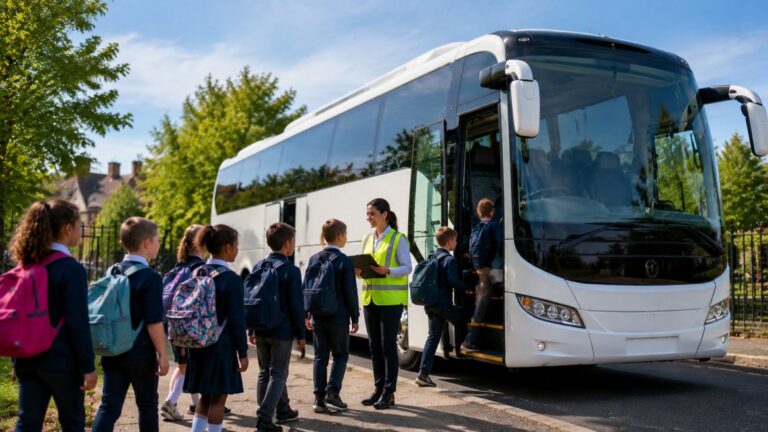
Before departure, brief pupils on expected behaviour: staying seated, wearing seatbelts, keeping bags in the overhead racks or under seats, and following instructions from staff and the driver.
On the Day: A Pre-Departure Checklist
Use this checklist before the coach departs:
- Confirm the driver’s identity and licence
- Check that all seatbelts are functioning
- Ensure emergency exits are unobstructed
- Verify the first aid kit is on board
- Count all passengers against the passenger list
- Share your emergency contact number with the driver
- Brief pupils on safety rules
Conclusion
School coach hire does not have to be complicated, but it does require careful planning. Verifying your operator’s credentials, checking the vehicle standards, understanding your own responsibilities, and briefing your group properly will significantly reduce risk and give everyone, children, parents, and teachers alike, peace of mind.
Atlantic Travel has been trusted by schools across the UK to deliver safe, comfortable, and professionally managed coach travel. Our team understands the unique requirements of school groups and is always on hand to answer your questions, guide you through the booking process, and ensure your trip runs smoothly from start to finish.
Ready to plan your next school trip? Get in touch with the Atlantic Travel team today at atlantictravel.co.uk to request a quote and speak with a specialist who understands exactly what schools need.
Frequently Asked Questions
1. Are seatbelts legally required on school coaches?
Yes. Under UK law, coaches used for organised school trips must be fitted with seatbelts, and passengers aged 3 and over are required to wear them.
2. How do I check if a coach operator is properly licensed?
You can search the DVSA’s public register of Operator Licences online using the company’s name or licence number. A reputable operator will also provide their licence number freely when asked.
3. What ratio of adults to children is recommended on a school coach trip?
This varies depending on the age of the pupils and the nature of the trip. The Department for Education recommends a minimum of one adult for every six children in early years settings, with adjusted ratios for older pupils.
4. What happens if the coach breaks down during the trip?
A professional operator will have a breakdown contingency plan in place. Ask your provider about this before booking. They should be able to explain how they would arrange a replacement vehicle and how quickly.
5. Can parents travel on the school coach?
In most cases, yes, provided they have the necessary DBS check in line with your school’s volunteering policy. Parent helpers must follow the same safeguarding protocols as teaching staff.