Northolt Drive, Mikar Business Park, Bolton BL3 6RE
Planning a school trip is exciting, but choosing the right transport can make or break the experience. Whether you are heading to a local museum, a residential outdoor centre, or a national attraction, the vehicle you choose affects comfort, cost, and how smoothly the day runs. Two of the most popular options for schools across the UK are minibuses and coach hire. Both have clear strengths, but they suit very different situations. This guide breaks down the key differences in plain terms so you can make the right call for your group, your budget, and your destination.
Understanding the Basics
Before comparing the two, it helps to know what you are actually choosing between.
A minibus typically seats between 8 and 16 passengers and is well-suited to smaller groups or short local journeys. A coach, by contrast, can seat anywhere from 35 to 70 passengers and is designed for longer journeys with greater comfort and storage space.
When a Minibus Makes Sense
A minibus is a practical, cost-effective option for smaller school groups. Here is when it tends to work best:
- Your group is between 8 and 16 pupils
- The journey is relatively short, such as a local visit within the town or county
- You need flexible parking at the destination, such as at smaller venues with limited coach access
- Budget is a priority and you do not need the added features of a full-size coach
- You want a more informal, accessible feel for younger children
Things to Keep in Mind with a Minibus
While minibuses are handy, they do have limitations. Luggage space is tight, which can be a problem for residential trips involving packed bags and equipment. There is also less legroom for older pupils on longer journeys, and the ride itself is not always as smooth as a full-size coach.
When a Coach Is the Better Choice
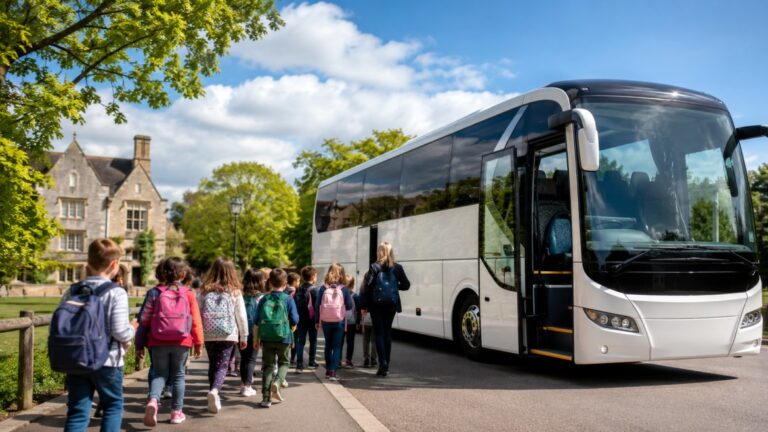
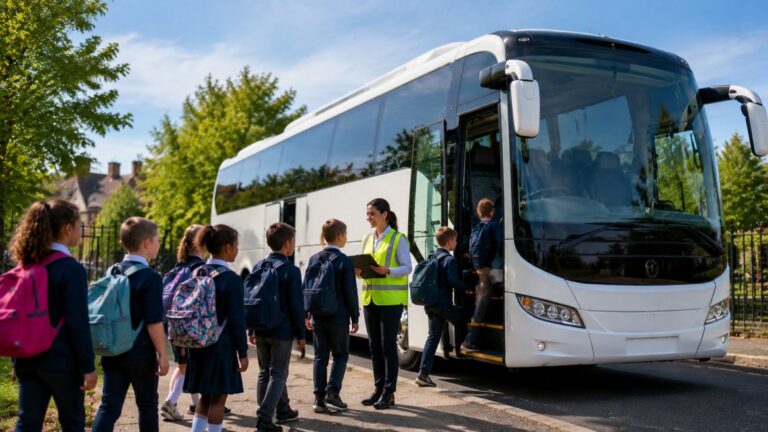
For most school trips, especially those travelling further afield, a coach hire for school is the superior option. Here is why schools across the country rely on them:
- Groups of 20 or more are far more cost-efficient on a single coach than multiple minibuses
- Onboard toilets are available on many coaches, reducing the need for unplanned stops
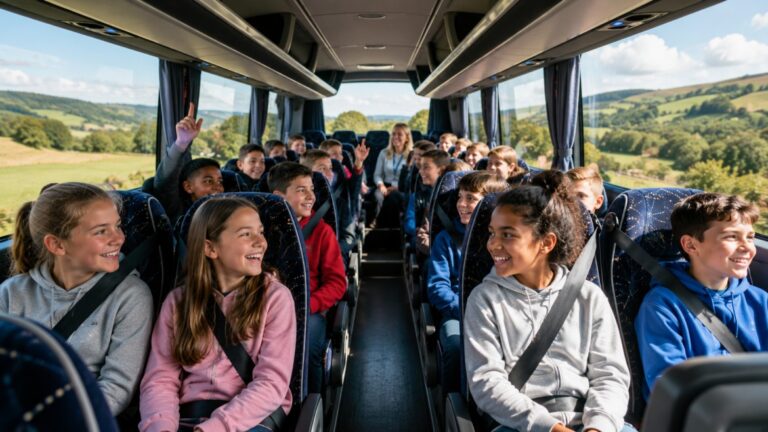
- Comfortable reclining seats and generous legroom make longer journeys far more manageable
- Ample luggage storage underneath the vehicle
- Air conditioning keeps the cabin comfortable, regardless of the season
- Safety features such as seatbelts on all seats and CCTV are standard on modern school coaches
Why Teachers Prefer Coaches on Full-Day Trips
Teachers consistently find that coaches make it easier to manage groups. Having everyone on one vehicle means better supervision, fewer logistical headaches, and a more unified experience for students. When you arrive together, you stay together, which simplifies everything from head counts to emergency procedures.
Cost Comparison: Minibus vs. Coach
Cost is always a consideration for schools working within tight budgets. Here is a general breakdown of how costs typically compare:
Minibuses are cheaper to hire per vehicle, but if your group is large enough to need two or three, the savings quickly disappear. A single coach carrying 50 pupils will almost always work out more economically than three minibuses doing the same job.
It is also worth factoring in driver costs, fuel, and tolls. The best coach hire company provides all of this within a single, transparent quote, so there are no surprises on the day.
Safety and Compliance for School Transport
Safety is non-negotiable when it comes to transporting children. Both minibuses and coaches used by professional hire companies are maintained to strict standards, but there are a few distinctions worth noting.
Professional coaches operated by licensed companies must comply with operator licensing requirements set by the Driver and Vehicle Licensing Agency (DVLA) and the Traffic Commissioner. Drivers hold a Passenger Carrying Vehicle (PCV) licence and are subject to working time regulations.
Environmental Considerations
Many schools now have sustainability goals and want transport choices that reflect their values. On this front, coaches have a clear advantage over multiple minibuses.
A single coach carrying 50 children produces significantly less carbon per passenger than three separate minibuses carrying the same number. If your school is committed to reducing its environmental footprint, choosing a coach for larger groups is the more responsible option.
Making Your Decision: A Simple Summary
Still unsure which to choose? Use this as a quick guide:
- Choose a minibus if your group is small (under 16), the journey is short, and the destination has limited access for large vehicles
- Choose a coach if your group is 20 or more, the journey is over an hour, comfort matters, or you need luggage space and onboard facilities
- Choose a coach if safety and supervision are top priorities for your school leadership team
Conclusion
There is no single right answer when choosing between a minibus and a coach for a school trip. The best choice depends on your group size, journey length, budget, and the needs of your pupils. For most full-day or multi-stop trips with groups of 20 or more, a coach will deliver better value, greater comfort, and simpler group management.
For smaller, local visits where flexibility is key, a minibus often ticks all the boxes.
At Atlantic Travel, we have been helping schools across the UK choose the right transport for decades. Our team is always happy to talk through your options and provide a no-obligation quote tailored to your exact requirements.
Ready to book your school trip transport? Get in touch with Atlantic Travel today and let us take care of the journey so you can focus on the experience.
Frequently Asked Questions
1. What is the minimum group size needed to justify hiring a coach?
As a general rule, a coach becomes the most cost-effective option when your group reaches 20 or more. Below that, a minibus or a smaller vehicle will usually offer better value.
2. Are coaches suitable for primary school trips?
Yes, absolutely. Coaches are used regularly for primary school trips across the UK. Many coaches used by school hire companies are fitted with seatbelts on every seat, making them a safe and comfortable option even for younger children.
3. Do minibuses come with a professional driver?
This depends on the hire company. Some providers supply vehicles only, expecting the school to provide a qualified driver.
4. How far in advance should schools book transport?
For popular dates such as the end of the school year or seasonal trips, it is wise to book at least six to eight weeks in advance. For less busy periods, three to four weeks is generally sufficient.
5. Can coaches access all school trip destinations?
Most major attractions and outdoor education centres are set up to accommodate coaches, with designated drop-off and parking areas. However, for smaller venues, rural locations, or tight urban streets, a minibus may offer better access.