Northolt Drive, Mikar Business Park, Bolton BL3 6RE

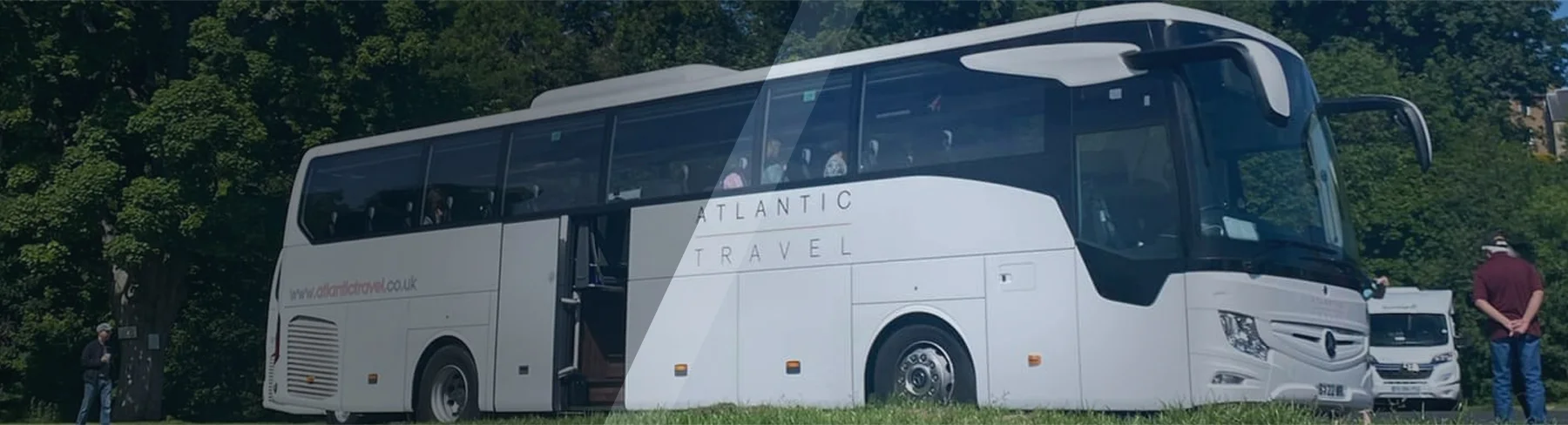
Choosing the right wedding bus service for your big day means finding transport that gets your guests to each part of the celebration safely, comfortably, and on time. The best option is not always the largest vehicle or the lowest price. It is the service that fits your guest numbers, route, venue access, timings, accessibility needs, and wedding style.
Good wedding transport helps the whole day feel calmer. Guests do not have to worry about parking, unfamiliar roads, taxis, drinks, late journeys, or finding the next venue. It is especially useful when the ceremony, reception, and accommodation are in different places. It can also be a thoughtful choice for older guests, families, out of town relatives, and anyone who would rather relax than drive along country lanes in formal shoes.
Atlantic Travel supports couples, families, and planners with comfortable and reliable group transport across the UK. From executive minibuses to larger coaches, the right vehicle can make the journey feel like part of the celebration rather than another job on the wedding list. With careful planning, your wedding guest transport can be calm, punctual, and pleasantly uneventful, which is exactly what you want on such an important day.
Do You Need A Wedding Bus Service?
A wedding bus service is most useful when guests need help travelling between key locations. This could mean a hotel to the ceremony, a ceremony to the reception, or a late evening return journey after the party. If your venue is hard to reach after dark, has limited parking, sits in a rural area, or has rules around private cars, organised transport can remove a lot of stress.
You may not need a full coach for every wedding. A smaller group might only need wedding minibus hire for close family, the wedding party, or hotel guests. A larger celebration may need wedding coach hire to move guests together and keep timings steady. If you are still deciding who should travel together, a dedicated wedding guest transport bus can be a practical starting point for planning routes, capacity, and return journeys.
Start With A Wedding Bus Service Transport Plan
Start with the transport plan before choosing the vehicle. It is easy to look at smart vehicle photos first, but a clear plan helps you book the right size, route, and timings. List every location involved, including guest accommodation, the ceremony venue, reception venue, photo stop, evening hotel, and any backup pickup points. Once every place is written down, you can see whether you need one journey, several journeys, or a shuttle style service.
Define each journey clearly. Guests may need transport from the hotel to the ceremony, from the ceremony to the reception, and then back to hotels at the end of the night. Think about whether most guests are staying at the same hotel, or whether you need more than one pickup point. Some couples also need a separate vehicle for the wedding party, parents, suppliers, or guests with mobility needs. If your reception finishes late, decide whether one return trip is enough or whether staggered departures would be kinder for guests.
A realistic wedding transport timeline works backwards from the time guests must arrive. Add driving time, boarding time, unloading time, walking distance from the bus stop to the venue entrance, traffic, parking, and a sensible buffer. Online journey times are useful, but they rarely include guests looking for coats, finding bags, or stopping for quick photos. A calm schedule is always better than a rushed one.
Estimate Wedding Bus Service Passenger Numbers
The total guest list is not the same as the number of bus passengers. Some guests will drive, some will stay nearby, and some may only use the return journey. The easiest way to estimate demand is to add a transport question to your RSVP or wedding website. Ask whether guests need outbound transport, return transport, wheelchair access, luggage space, child seating advice, or help reaching a pickup point.
Think beyond simple numbers. Guests wearing formal outfits may appreciate a little more room than the legal seating capacity suggests. Bags, prams, mobility aids, flowers, and coats can all affect comfort. If you have older guests or children, boarding time may be longer too. A good operator will help you balance official capacity with real comfort, so the journey feels relaxed rather than crowded.
Choose The Right Wedding Bus Service Vehicle
The right vehicle depends on group size, route, distance, access, and guest comfort. A minibus can work well for smaller wedding parties, short transfers, and venues with narrower access. A coach may be better for larger groups, longer journeys, and guests travelling together from one hotel. If you are planning a more intimate celebration, wedding minibus hire can keep things simple without booking space you do not need.
For medium sized weddings, a shuttle bus arrangement may be useful. This works well when guests are staying at one or two hotels near the venue. The important detail is whether one vehicle can complete all the runs within your timeline. Include loading, unloading, turning around, traffic, and any waiting time at each end. A short route can still become tight if guests board slowly or the venue has limited drop off space.
For larger weddings, a coach can offer strong value because many guests travel together. Check whether there is enough luggage space, whether a toilet is needed for longer journeys, and whether the coach can safely reach the venue. Ask if the quoted vehicle is the exact vehicle planned for your date or a similar option from the same fleet. That small question can prevent awkward surprises later.
Check Venue Access For A Wedding Bus Service
Venue access is one of the most overlooked parts of wedding bus hire. Beautiful venues are not always designed with large vehicles in mind. Historic buildings, rural barns, country houses, and city centre hotels may have narrow entrances, low branches, tight turning space, or limited waiting areas. Before signing anything, ask your venue where buses and coaches can stop, wait, and turn safely.
Check road width, low bridges, sharp bends, steep driveways, restricted streets, permit areas, and pedestrian safety. If the bus cannot stop near the entrance, guests may need a short walk. That matters in heels, rain, or winter weather. For rural or complex venues, ask whether the operator can review the route in advance. It is far better to find access concerns during planning than when the driver is already outside the venue.
Check Wedding Bus Service Safety, Licensing, And Insurance
Safety should be at the heart of your decision. Ask the operator about their licence, insurance, vehicle checks, driver experience, seatbelts, safety steps, and breakdown support. In the UK, GOV.UK explains that operators generally need a public service vehicle operator's licence when vehicles designed or adapted for nine or more passengers are used to carry passengers for payment. You can read the official overview here: public service vehicle operator licensing guide.
You do not need to become a transport law expert before choosing wedding coach hire. You should simply feel comfortable asking clear questions. A reliable provider should respond clearly and confidently. If answers are vague, rushed, or only given verbally, take time before you book. Your wedding transport carries people you love, so paperwork and safety standards matter. They are the base of peace of mind.
Make Accessibility Part Of Your Wedding Bus Service Booking
Accessibility should be discussed early, not added at the end. Ask whether the vehicle has a working lift or ramp, a suitable wheelchair space, secure restraints, and a safe boarding setup. Confirm whether a wheelchair user will remain in their wheelchair during travel or transfer to a seat. Also check how wheelchair space affects total seating, as capacity may change.
Speak to guests privately and respectfully so you understand their needs before requesting quotes. Some may need step free boarding, extra time, assistance dogs, nearby seating, space for mobility equipment, or help from the pickup point to the venue entrance. These details are practical, but they also help loved ones feel comfortable, included, and cared for. Include the requirements in the written booking, because written notes keep everyone aligned during a busy wedding week.
Compare Wedding Bus Service Quotes Properly
Wedding bus cost can vary because no two weddings are quite the same. A quote may depend on date, service hours, mileage, number of vehicles, passenger numbers, waiting time, parking, tolls, late night returns, and special needs. To compare fairly, give every provider the same brief. Include exact addresses, arrival times, return times, estimated riders, accessibility needs, and venue access notes.
Check what each quote includes. Does it cover the driver, fuel, mileage, waiting time, VAT, parking, cleaning, overtime, extra runs, and replacement vehicle support? A cheaper quote can become more expensive if key items are left out. This is where a careful comparison matters more than a quick look at the final figure. If you want a deeper look at pricing, Atlantic Travel also explains wedding bus hire prices in a way that can help UK couples budget with more confidence.
Do not choose only on price. Good communication, suitable vehicles, experienced drivers, clear paperwork, and backup planning all have real value. Your guests will not remember whether the transport was twenty pounds cheaper. They will remember if it was late, cramped, confusing, or missing at midnight.
Questions To Ask Before Booking A Wedding Bus Service
Before you commit, prepare a short list of questions and ask each provider the same things. This makes comparison easier and shows you how well each company communicates. You do not need to make it formal or awkward. You are simply checking that the service can handle the pressure of a wedding day.
- Availability: Is the exact date and full operating window available?
- Vehicle: What vehicle will be supplied, and can you see recent photos?
- Capacity: How many guests can travel comfortably with formal clothing and bags?
- Routes: Can the vehicle access every venue and pickup point safely?
- Safety: What licence, insurance, and maintenance details can be provided?
- Accessibility: What ramp, lift, wheelchair space, or boarding support is available?
- Operations: Who is the wedding day contact, and how will the driver communicate?
- Backup Plan: What happens if there is a breakdown, road closure, or delay?
- Pricing: What overtime rates, deposits, cancellation terms, and extra charges apply?
- Experience: Has the operator handled wedding shuttle service routes and late night departures before?
Read The Wedding Bus Service Contract Carefully
Your contract should turn every important conversation into a clear written agreement. It should show the date, operating hours, vehicle type, vehicle number, passenger capacity, pickup locations, drop off locations, journey times, and number of runs. It should also confirm the total price, deposit, payment schedule, cancellation terms, rescheduling rules, and overtime rate.
Pay close attention to waiting time and late finishes. Weddings often run a little behind, even with a good planner and a very tidy spreadsheet. If the reception overruns, you need to know who can approve extra time and how much it costs. Also check policies on food, drink, decorations, music, and cleaning, especially if guests are travelling after the evening party.
Replacement vehicle terms are important too. Ask what happens if the planned bus becomes unavailable or breaks down before arrival. The answer should be practical and clear. A professional provider should have a sensible process and a realistic way to keep your guests moving.
Plan The Wedding Bus Service On The Day
Once the booking is confirmed, give the transport plan a clear owner. This should not be the couple unless there is truly no other option. Choose a wedding planner, venue coordinator, trusted family member, or organised friend who can speak with the driver and help guests find the right vehicle. The couple should be busy getting married, not answering calls about missing umbrellas.
Prepare a final itinerary and share it with the operator and venue. Include addresses, contact numbers, pickup times, passenger estimates, accessibility notes, parking details, and emergency contacts. Clear pickup signs help guests, especially at hotels with more than one entrance. If you have multiple buses or runs, appoint a bus captain for each group so the driver is not trying to count guests while everyone is chatting and taking photos.
Plan For Wedding Bus Service Delays And Emergencies
Even well planned transport needs a backup plan. Ask what happens during severe weather, road closures, traffic incidents, vehicle problems, venue access issues, or missing guests. Decide who has authority to approve a route change or overtime. Keep a guest notification plan ready, such as a wedding WhatsApp group, planner message, or hotel reception note.
Build a buffer between guest arrival and ceremony start. The more important the journey, the more breathing room you need. A bus arriving ten minutes early feels calm. A bus arriving two minutes before the ceremony feels like a game show nobody asked to join. Good wedding day transport is mostly about removing stress before it appears.
Common Wedding Bus Service Mistakes To Avoid
The most common mistake is booking transport before confirming the route, timings, and venue access. Another is using the maximum legal capacity as the comfort target. Wedding clothing, luggage, mobility equipment, and guest age can all affect what feels comfortable. Forgetting return transport is another common problem, especially when the ceremony planning gets all the attention and the late night journey home is left until the last minute.
Couples can also get caught out by comparing quotes that include different things. One provider may include waiting time, while another charges extra. One may include parking, while another expects it to be added later. Accessibility can also be overlooked until after signing, which limits options. The safer route is to document everything early and confirm every detail in writing.
Use A Simple Wedding Bus Service Decision Checklist
When you have two or three strong options, score each one from one to five across the areas that matter most. Look at safety and licensing, vehicle suitability, accessibility, reliability, backup planning, communication, clear pricing, venue access, guest comfort, and contract quality. This simple scoring method helps you avoid choosing based only on price or a nice photo.
The right wedding bus service should make your day easier, not add more admin. It should feel organised, clear, and reassuring from the first enquiry to the final drop off. If the provider understands your timeline, answers clearly, documents the plan, and puts guest comfort first, you are much closer to a smooth journey. When you are ready, share your route details, guest numbers, and timings with Atlantic Travel so the team can help you choose the wedding transport option that fits your day.
Frequently Asked Questions
How Early Should I Book A Wedding Bus Service?
Book as early as you can once your venue, date, and main timings are confirmed. For busy wedding seasons, several months ahead gives you more choice of vehicles and better planning time.
Should I Choose A Coach Or A Minibus For My Wedding?
Choose a coach for larger groups or longer journeys, and a minibus for smaller parties, short routes, or tighter venue access. The best option depends on guest numbers, comfort, parking, and route conditions.
How Much Does Wedding Bus Hire Cost?
The cost depends on distance, hours, vehicle size, number of runs, waiting time, date, and any extra requirements. Always ask for a full written quote so you can compare like for like.
Does A Wedding Bus Service Include Return Transport?
Not always, so confirm this before booking. Ask whether the service includes one return journey, multiple late night departures, or a shuttle between the venue and hotels.
What Should Be Included In The Contract?
The contract should include date, times, vehicle details, passenger capacity, routes, price, payment terms, overtime rates, cancellation rules, accessibility needs, and backup arrangements.