Northolt Drive, Mikar Business Park, Bolton BL3 6RE
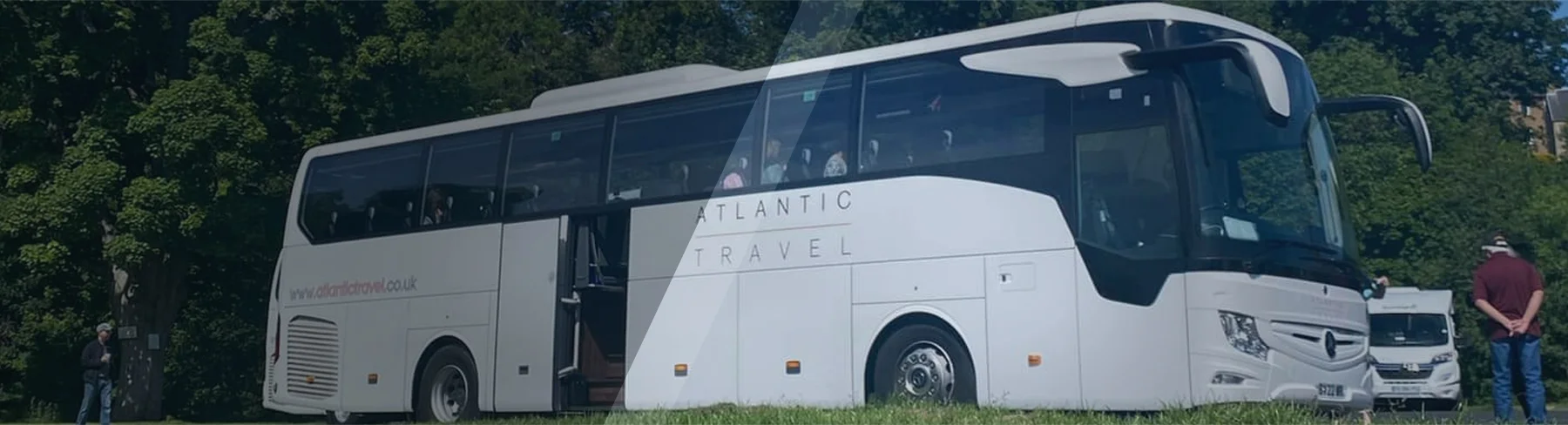
Choosing between a double decker and a single decker bus is one of the first decisions you will make when booking group transport. The right choice depends on your group size, the type of journey, and how much luggage you are bringing along. A double decker bus offers more seats and a sense of occasion, while a single decker bus is easier to manoeuvre and often better suited to shorter or more flexible routes. In this guide, we break down the practical differences between both vehicle types so you can book the coach that actually fits your trip, not just the one that sounds impressive.
What Is the Difference Between a Double Decker and Single Decker Bus?
A double decker coach has two full levels of seating, typically holding between 70 and 90 passengers. A single decker coach has one level and usually seats between 16 and 57 passengers, depending on the model.
Beyond capacity, the two vehicle types differ in:
- Height and clearance, which affects which routes and venues they can access
- Boarding time, since double deckers take longer to fill and empty
- Onboard facilities, such as toilets, which are more common on single deckers used for long distance travel
- Fuel efficiency per passenger, where double deckers can work out more cost effective for very large groups
Passenger Capacity
If you are transporting a school year group, a large wedding party, or an entire football club, a double decker often makes more financial sense. Splitting 80 people across two single deckers means paying for two drivers and two vehicles, whereas one double decker can do the job in a single trip.
For smaller groups, a single decker is usually the more sensible option. There is little benefit in hiring a vehicle with 40 empty seats when a 30 seater would do the same job more efficiently.
Route and Access Restrictions
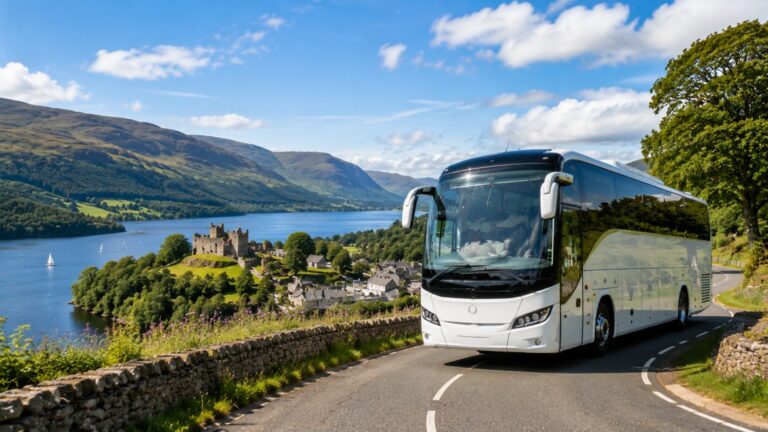
Double decker coaches are taller, which matters more than people expect. Some routes have low bridges, narrow country lanes, or venues with restricted height access that a double decker simply cannot use. Single deckers are more versatile here, particularly for rural venues, historic town centres, or airport transfers where manoeuvrability counts.
If your journey involves multiple stops through residential areas or tight village roads, a single decker will almost always be the safer and quicker choice.
Comfort and Journey Experience
Comfort is not just about seat cushioning. It is about how the journey actually feels.
Long Distance Travel
For journeys over two or three hours, single deckers tend to offer a smoother experience. Many come fitted with onboard toilets, air conditioning, and reclining seats, which matter far more on a five hour trip than on a 45 minute transfer.
Short Trips and Local Transfers
For local transfers, such as taking a wedding party from a church to a reception venue a few miles away, comfort features matter less than simply moving a large group efficiently. This is where double deckers shine, particularly for shorter routes with fewer stops.
Cost Considerations
Coach hire pricing is not just about the size of the vehicle. It also reflects fuel consumption, driver hours, and vehicle availability.
As a general rule:
- Double deckers cost more per hour but less per passenger for large groups
- Single deckers offer better value for groups under 40 people
- Multi-day hires often favour single deckers due to fuel efficiency and easier parking
It is always worth asking your coach hire provider for a like for like comparison based on your actual group size, rather than assuming bigger automatically means cheaper.
Which Events Suit Which Coach?
Best Suited to Double Deckers
- School trips and educational outings with large year groups
- Football and rugby club away days
- Corporate events with a single large group moving together
- Festivals and large scale day trips where luggage needs are minimal
Best Suited to Single Deckers
- Weddings, where guests often need step free boarding and more legroom
- Airport transfers, where luggage space and easy loading matter
- Funeral transport, where a calmer, more discreet vehicle is appropriate
- Corporate travel involving business attire and laptops, where comfort is a priority
Practical Questions to Ask Before You Book
Before confirming your coach hire, it is worth checking:
- What is the exact height of the vehicle, and does your route or venue have any restrictions?
- Does the coach have a toilet, and is this necessary for your journey length?
- How much luggage space is included, and will it be enough for your group?
- Is the pickup and drop off point accessible for the vehicle size you are booking?
A reputable coach hire company should be able to answer all of these questions clearly before you commit.
Conclusion
There is no single right answer when it comes to double decker versus single decker coaches. The best choice comes down to your group size, your route, and what matters most for your specific trip, whether that is capacity, comfort, or access. If you are still unsure which option suits your journey, speak to a coach hire specialist who can talk through your requirements and recommend the right vehicle for your group. Get in touch with Atlantic Travel today for a tailored quote and expert advice on choosing the coach that fits your trip perfectly.
Frequently Asked Questions
How many people can a double decker coach carry?
Most double decker coaches seat between 70 and 90 passengers, depending on the exact model and layout used by the operator.
Are single decker coaches better for long journeys?
Generally yes. Single deckers are more likely to include onboard toilets and offer a smoother ride, which makes them better suited to journeys over a few hours.
Can double decker coaches access all venues?
No. Height restrictions, low bridges, and narrow roads can prevent double deckers from reaching certain venues, so it is important to check access before booking.
Is a double decker coach cheaper than hiring two single deckers?
For large groups, yes. One double decker usually works out more cost effective than hiring two single deckers, since you only need one driver and one vehicle.
Which coach type is best for a wedding?
Single deckers are usually preferred for weddings due to easier boarding, more legroom, and a more comfortable overall experience for guests in formal wear.