Northolt Drive, Mikar Business Park, Bolton BL3 6RE

Wedding Guest Transport Bus Benefits
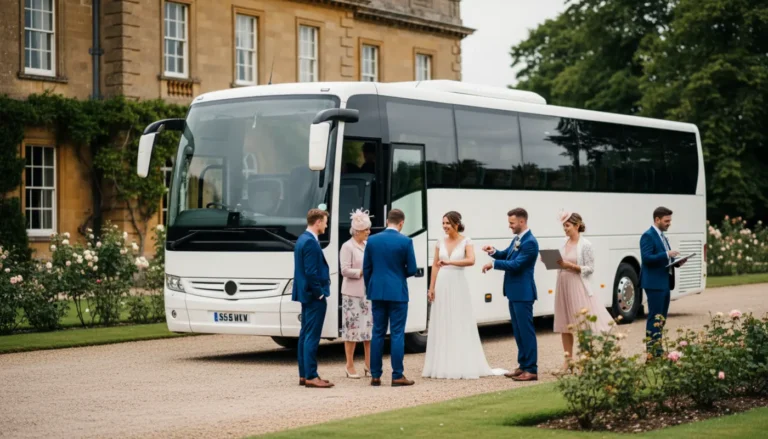
A wedding guest transport bus is a smart investment because it keeps your wedding day calm, organised, and easier for everyone. It helps guests arrive together, reduces parking problems, gives people a safer way home after the reception, and protects the timeline you have spent months planning. If your venue is rural, your guests are staying away from the venue, or your ceremony and reception are in different places, group transport can quickly move from a nice extra to a very useful part of the day.
Many couples wonder whether wedding transport is worth the cost. That is a fair question, especially when wedding budgets already have so many moving parts. The value of group transport is not only about the price of the vehicle. It is about saving time, reducing stress, helping guests feel looked after, and avoiding last minute problems that can become costly or tiring on the day.
A well planned wedding guest transport bus gives your day more structure. Guests know where to be, when to leave, and how they are getting back at the end of the night. DKU helps couples arrange comfortable wedding transport across the UK, with reliable vehicles, professional drivers, and practical support for guest journeys from start to finish.
What Is A Wedding Guest Transport Bus?
A wedding guest transport bus is a planned group travel service that moves guests between key wedding locations. This may mean taking guests from a hotel to the ceremony, from the ceremony to the reception, or from the evening party back to local accommodation. In the UK, this could be a minibus, an executive coach, a single decker bus, or a larger vehicle depending on the number of guests and the route.
The word bus can cover several different arrangements. Some couples only need one transfer before the ceremony. Others need a full wedding shuttle service with several journeys throughout the day. A rural wedding may need hotel pickup, venue drop off, and late night return transport. A city wedding may need fewer miles but more careful timing because of traffic, parking rules, and safe loading areas.
The best option depends on your guest list, venue location, timings, accessibility needs, and budget. A single coach can work well when most guests are staying in one hotel. Several smaller vehicles may work better when guests are spread across different places or when narrow country lanes make a large coach less practical. If you are unsure, DKU can talk through coach hire and minibus hire options based on your route and guest numbers.
Why A Wedding Guest Transport Bus Is A Worthwhile Investment
A wedding guest transport bus is worth considering because it solves several problems at once. It is not just transport from one place to another. It protects your schedule, supports guest comfort, reduces parking pressure, and gives everyone a clear plan. When people travel separately, delays can happen for many simple reasons. Someone cannot find the venue entrance. Someone else misses a taxi. Another guest follows the wrong postcode and ends up on a very scenic detour.
Group transport brings order to that chaos. Guests meet at an agreed pickup point, board together, and arrive at the venue within a planned time window. This is especially useful if you are working with a tight ceremony schedule, a venue with limited access, or a reception that starts soon after the ceremony. It also means fewer questions for you on the morning of the wedding, which is always welcome. You do not have to manage every guest journey yourself, and you really should not have to.
It Keeps Your Wedding Timeline On Track
Online maps can tell you the driving time between two places, but they do not include the full wedding transport window. Guests need time to gather, board, settle in, arrive, get off the bus, find the entrance, and take their seats. A twenty minute drive can easily become a forty five minute movement when you add real people, formal outfits, bags, children, and the guest who says they only need two minutes but somehow needs fifteen.
A good schedule works backwards from the ceremony or reception start time. If the ceremony begins at 3 pm and you want guests seated by 2.45 pm, aim for the bus to arrive around 2.30 pm. Add time for unloading, walking to the ceremony space, and any venue access needs. Then add boarding time at the pickup point and a sensible buffer for traffic or slow country roads.
This planning approach is especially useful for countryside weddings, estate venues, barn weddings, and locations where guests may not know the area. It also helps your photographer, venue team, caterers, and registrar stay on schedule. A bus will not make time stand still, sadly, but it gives your timeline a much better chance of behaving itself.
It Gives Guests A Safer Way To Travel
Weddings often involve a glass of fizz, a toast, and a dance floor that gets more lively as the evening goes on. Providing return transport helps guests plan ahead without relying on driving after drinking. It also reduces the risk of people being stranded at a rural venue late at night when taxis are limited or fully booked.
The return journey matters just as much as the arrival. Many couples focus on getting guests to the ceremony but forget that everyone also needs to get home or back to accommodation. A late night wedding shuttle can include an early return for families or older guests, a main return after the reception, and a final departure for the last dancers standing.
Clear final departure times are important. Guests should know when the last bus leaves, where it leaves from, and what to do if they miss it. That small amount of planning can prevent confusion at midnight, when nobody wants to be searching for taxi numbers in a car park.
It Removes Parking And Navigation Stress
Venue parking can be one of the most overlooked parts of wedding planning. A venue may look spacious online but still have limited parking, narrow entrances, soft ground, shared access roads, or restricted turning space. A wedding guest transport bus reduces the number of individual cars arriving and leaving at the same time.
This is a real advantage for rural venues, country houses, farms, barns, coastal venues, and places with limited mobile signal. Guests do not have to worry about unclear directions, sat nav errors, or finding a safe place to park. The venue team also benefits because arrivals are more controlled and fewer cars need managing.
Before booking, check whether the venue has suitable coach access, a safe drop off point, and enough space for the vehicle to turn. Does the entrance have a tight bend? Is the road narrow? Is there a safe place for guests to get off the bus? Share these details with your transport provider early, so the right vehicle and route can be planned with confidence.
It Improves The Guest Experience
Good transport makes guests feel looked after. Out of town guests, older relatives, and people who do not drive will appreciate knowing that travel has been arranged for them. It also means guests can relax, chat, and enjoy the day without worrying about taxi apps, parking meters, or who is staying sober for the drive back.
A bus can also add to the social side of the day. Guests who have not met before can start chatting on the journey. Families can travel together. Friends can avoid splitting into separate cars. It creates a shared experience before the ceremony even begins.
Guest communication is key. Add pickup addresses, departure times, return times, and the final bus time to your wedding website or guest information sheet. If your pickup point is at a hotel, include the exact entrance or landmark. Clear information reduces calls, texts, and the classic wedding morning question of where are we supposed to be again?
When Should You Provide Wedding Transport For Guests?
You should provide wedding transport for guests when travel could cause delays, confusion, or safety concerns. This is common when most guests are staying in one hotel, the venue is hard to reach by public transport, taxis are limited late at night, or the ceremony and reception are in different places. Organised transport can keep the day moving smoothly and help guests feel confident about where they need to be.
Guest transport is also helpful when parking is limited, expensive, or difficult to manage. It is worth considering if you have older guests, children, disabled guests, international visitors, or people who are unfamiliar with the area. Weather can also play a part. A walk that looks easy in June sunshine may feel rather less charming in October rain.
Distance alone is not the only factor. A short route with poor parking, tricky access, and limited taxis may need a bus more than a longer route with simple roads and plenty of parking. Think about the full guest journey, not just the mileage.
How To Calculate How Many Guests Need Transport
To calculate how many guests need transport, start with your actual rider list rather than your total RSVP count. Some guests will drive themselves. Some may stay at the venue. Others may travel with family. Your transport number should reflect the people who genuinely need a seat, not everyone invited to the wedding.
Break the list into groups. Think about the wedding party, immediate family, hotel guests, out of town guests, guests who do not drive, and anyone who may need accessible transport. Then consider each part of the day separately. You may have fifty guests needing transport to the ceremony, seventy needing a transfer to the reception, and only forty needing the final late night return.
Avoid planning to fill every seat to the maximum. Formalwear, coats, bags, children, and mobility aids can all affect comfort. A bus that technically seats a certain number may feel cramped if every guest has extra items. A small comfort margin can make the journey feel much better.
Choosing The Right Wedding Bus Or Coach
Choosing the right wedding bus or coach depends on guest numbers, route type, access, and the level of comfort you want for the day. A minibus is often ideal for smaller groups, flexible routes, or shorter transfers. A full size coach can be more efficient for larger groups travelling from one hotel to one venue. An executive coach may suit longer journeys where comfort matters more.
Several smaller vehicles can work well if guests are staying in different places or if the venue has narrow roads. One larger coach may be simpler if most guests are travelling from the same pickup point. There is no single best answer for every wedding. The best choice is the one that fits your timings, route, passenger numbers, and venue access.
Accessibility should be discussed early. Some guests may need step free access, a wheelchair accessible vehicle, securement space, priority seating, or extra boarding time. Official guidance on bus and coach accessibility explains common features such as ramps, lifts, wheelchair spaces, handrails, lighting, and assistance for disabled passengers. Always confirm the exact vehicle details with your transport provider before booking. You can also ask DKU about accessible transport options when planning your journey.
How To Plan The Wedding Shuttle Timetable
To plan a wedding shuttle timetable, start with the moments that cannot move. These usually include the ceremony start time, reception meal time, speeches, evening guest arrival, and final venue curfew. Once those are fixed, work backwards to decide when guests need to board, arrive, and return.
For example, if your ceremony starts at 3 pm, you may want guests seated by 2.45 pm and the bus arriving by 2.30 pm. If the drive takes thirty minutes, add fifteen minutes for boarding and another ten to fifteen minutes for delays or slow access roads. That means the bus may need to depart around 1.45 pm, even though the map says the drive is only half an hour.
Return transport needs its own plan. Consider an early bus for families, a main bus after the evening food or final formal moment, and a late bus at the end of the night. Publish the final departure time clearly. If guests know the last bus leaves at 12.15 am, they can plan their goodbyes, collect coats, and make their way to the pickup point without panic.
What To Include In Your Guest Transport Plan
Your guest transport plan should include simple, practical details that guests can understand quickly. Keep the information clear, visible, and repeated in more than one place. Add it to your wedding website, include it with final details, and ask the venue or hotel to display a small sign if possible.
- Pickup address: Include the full address, postcode, and a clear meeting point.
- Departure time: Tell guests when the bus leaves and when they should arrive to board.
- Return times: Share early, main, and final return options where relevant.
- Accessibility contact: Give guests a way to tell you about mobility needs in advance.
- Day contact: Appoint someone other than the couple to handle transport questions.
- Missed bus plan: Explain what guests should do if they miss a departure.
A day contact is very useful. This could be a wedding planner, trusted friend, family member, or venue coordinator. The important thing is that it should not be either of you. You have vows to say, photos to take, and cake to consider very seriously.
How A Wedding Guest Transport Bus Can Control Costs
A wedding guest transport bus can help control costs by replacing several separate journeys with one organised plan. It is not always cheaper than every option, but it can offer better overall value when you compare it with separate taxis, guest fuel, parking, car hire, late night rides, and emergency last minute travel. The more scattered the travel plan, the more hidden costs can appear.
For example, several late night taxis, parking charges, and separate hotel transfers can quickly add up, especially if guests are travelling in small groups. One organised group vehicle can be simpler to manage and easier for guests to understand. It also gives you one clear plan instead of lots of separate arrangements that may change on the day.
Value also includes time saved and stress avoided. If a bus prevents late arrivals, parking confusion, and repeated guest questions, that has real worth. It can also reduce the need for guests to book expensive taxis at peak times or find transport in areas with limited availability.
To control costs, keep pickup points simple. One or two central hotel stops are usually easier and cheaper than collecting guests from many separate addresses. Be realistic about timing too. Extra waiting time, overtime, late night operation, mileage, parking fees, and multiple journeys can all affect the quote. Give every provider the same route, times, and passenger numbers so you can compare fairly.
What To Ask Before Booking A Wedding Bus
Before booking a wedding bus, ask for the practical details in writing. Confirm the vehicle type, seated capacity, operating hours, pickup points, route, waiting time, overtime rate, and return schedule. Ask whether the quote includes mileage, parking, tolls, driver expenses, and late night operation.
You should also ask what happens if the vehicle breaks down or is delayed. A professional provider should explain their backup process clearly. If you have guests with mobility needs, make sure those requirements are recorded in the booking, not just mentioned in a phone call.
It is also worth checking whether food, drinks, decorations, or music are allowed on board. Some couples want the journey to feel lively, while others simply want calm and comfortable transport. Either approach is fine, as long as expectations are clear before the day. If you are ready to compare options, you can request a quote with your guest numbers, route, and timings.
Common Wedding Guest Transport Mistakes To Avoid
The most common wedding guest transport mistake is leaving it too late, especially for peak wedding dates. Coaches and minibuses can book up quickly during popular months, weekends, school event seasons, and major local events. Early planning gives you more choice and a better chance of securing the right vehicle.
Another common mistake is forgetting the return journey. Getting guests to the venue is only half the job. If the venue is rural or the reception finishes late, the journey back needs just as much attention. Guests should never be left guessing how they will get back to their hotel.
Couples also sometimes rely too heavily on map timings. Real wedding transport includes boarding, delays, venue access, and guest movement. Build in buffers and keep the schedule realistic. Your bus does not need to be rushed. Your guests do not need to sprint. Your timeline will thank you.
Frequently Asked Questions
Is A Wedding Guest Transport Bus Worth It?
Yes, a wedding guest transport bus is worth it when guests need a reliable way to travel between hotels, venues, and late night accommodation. It is especially useful for rural venues, limited parking, guests who may drink, and anyone unfamiliar with the area.
How Early Should Wedding Guest Transport Be Booked?
Wedding guest transport should be booked as early as possible once your venue, guest numbers, and timings are reasonably clear. For peak dates, large groups, rural venues, or accessible vehicles, earlier booking gives you more choice.
How Many Guests Fit On A Wedding Bus?
The number of guests that fit on a wedding bus depends on the vehicle, but comfortable wedding capacity may be lower than the maximum seat count. Formal clothing, bags, children, and mobility aids can all affect the best vehicle size.
Should The Bus Cover The Ceremony And Reception?
If the ceremony and reception are in different places, a planned transfer is usually helpful. For one venue weddings, you may only need hotel pickup and late night return transport.
Are Wedding Buses Accessible?
Some wedding buses and coaches are accessible, but you must confirm the exact vehicle features before booking. Ask about ramps, lifts, wheelchair space, securement, step access, and boarding assistance.
Final Thoughts On Wedding Guest Transport Bus Value
A wedding guest transport bus is one of those investments that quietly improves the whole day. It helps guests arrive on time, supports safer return journeys, reduces parking problems, and gives everyone a clearer plan. It can also make your wedding feel more thoughtful, welcoming, and well organised.
Start with your guest count, accommodation locations, venue distance, accessibility needs, and return journey. Then compare the total value of organised group travel against the cost and stress of everyone making their own way. If your wedding involves multiple locations, rural access, limited parking, or a lively evening celebration, a bus may be one of the best decisions you make.
If you would like help planning the right route, vehicle size, and shuttle timings, contact DKU with your venue details and guest list. The team can help you build a practical transport plan that keeps the day calm, comfortable, and easy for everyone.