Northolt Drive, Mikar Business Park, Bolton BL3 6RE

Hiring a coach for a large group means matching the right size of vehicle to your passenger numbers, confirming the operator holds a valid PSV operator licence, agreeing your pick up points and timings in writing, and booking early enough to secure the vehicle you actually want. Get those four things right and the rest of the journey usually looks after itself. At Atlantic Travel, our team in Bolton arranges group transport across Manchester, the North West and the wider UK every week, so this guide sets out exactly what to check, what to ask and what to expect before you confirm a booking.
Moving fifty or eighty people is very different from booking a taxi. You are coordinating arrival times, luggage, accessibility needs, comfort breaks and often a tight schedule at the other end. The good news is that group travel by coach is straightforward once you understand how operators work and what genuinely affects the quality of your day.
This guide is written for anyone in the UK organising travel for a school, a workplace, a wedding coach hire, a sports club, a community group or a corporate event.
What Counts as a Large Group?
There is no fixed definition, but in practice UK coach operators treat anything above sixteen passengers as group travel. The practical thresholds are:
- Up to 16 passengers: an executive minibus is usually the most economical choice
- 17 to 35 passengers: a midi coach or single deck bus
- 36 to 57 passengers: a full size executive coach
- 58 to 90 passengers: a double decker, or two coaches running together
A useful rule of thumb: always count your passengers, then add a small margin. Groups grow. A party of 46 that books a 49 seat coach has very little room for the two colleagues who join at the last minute, or for the luggage nobody mentioned.
Choosing the Right Vehicle
The vehicle you choose shapes the entire experience. Here is how the main options compare.
Executive Minibuses
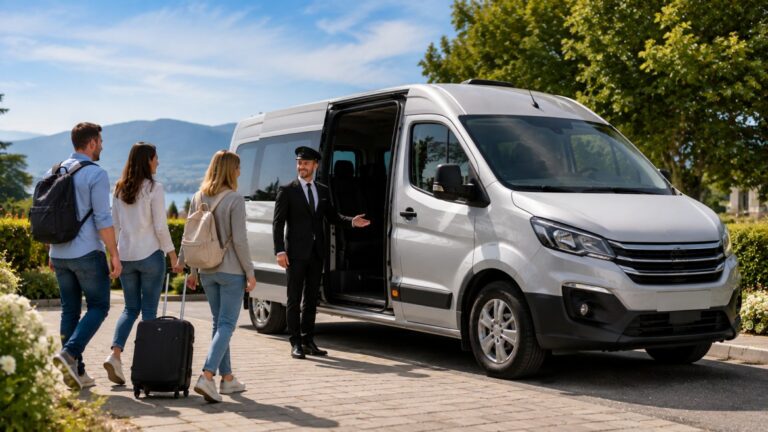
Best for smaller teams, airport runs and short hops. Modern executive minibuses come with leather reclining seats and USB charging at every seat. They are easy to manoeuvre in city centres and residential streets, which matters if your pick up point is a narrow road rather than a car park.
Executive Coaches
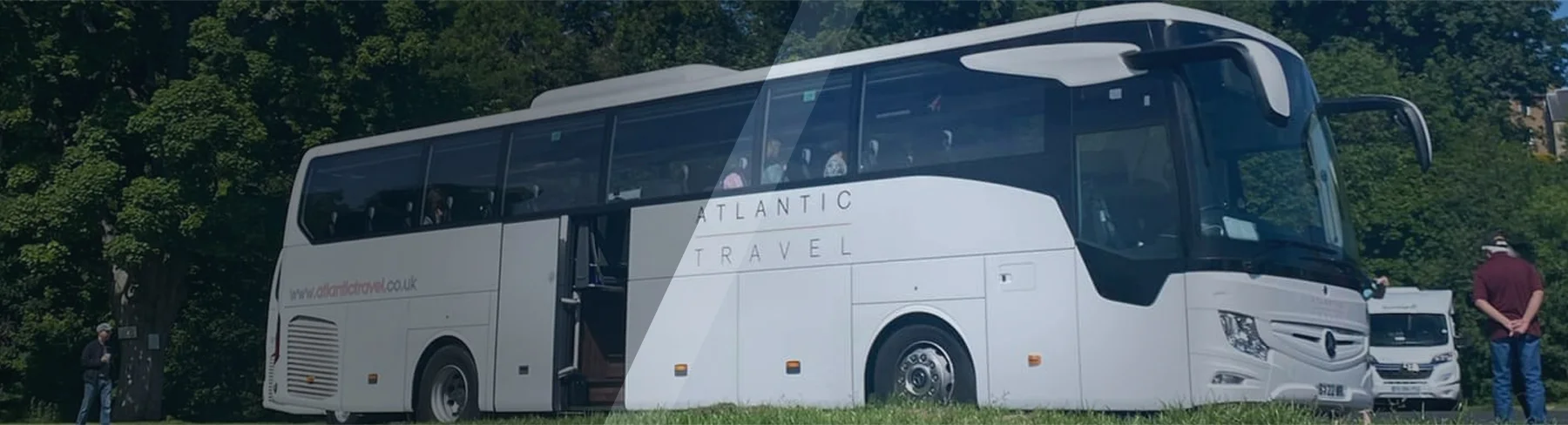
The workhorse of group travel. Reclining seats, air conditioning, USB points, generous underfloor luggage space and, on longer distance vehicles, an onboard washroom. If your group is travelling more than an hour, or travelling to a business event where people want to arrive presentable, this is the sensible choice.
Single Decker Buses
Designed for higher passenger turnover rather than long distance comfort. They suit shuttle services, rail replacement work, home to school routes and short transfers between venues, where passengers board and alight frequently.
Double Decker Buses
The efficient answer when you need to move a large number of people in one vehicle. One double decker often costs less than two separate coaches and keeps your group together, which makes head counts and timings far simpler. Worth checking your route for low bridges and tight entrances before you commit.
PSVAR Compliant Coaches
PSVAR stands for the Public Service Vehicles Accessibility Regulations. These vehicles are fitted with wheelchair access and other accessibility features. If your group includes a wheelchair user, or if you are arranging home to school transport or rail replacement work, a PSVAR compliant vehicle may be a legal requirement rather than a preference. Raise this at enquiry stage, because accessible vehicles are in shorter supply.
Questions to Ask Before You Book
A short conversation at the enquiry stage prevents most problems later. Ask the operator:
- Do you hold a valid PSV operator licence, and what is your licence number?
- Are your drivers DBS checked, and to what level?
- How often are your vehicles safety inspected?
- Is the quoted price fully inclusive, including driver hours, tolls, parking and congestion charges?
- What happens if a vehicle breaks down on the day?
- Do you own the coach you are quoting for, or will the work be subcontracted?
- What are your cancellation terms and deadlines?
That last question about subcontracting matters more than people realise. Some booking platforms take your money and then pass the job to whichever operator is available. You have no idea who turns up. Booking directly with an operator that runs its own fleet means the vehicle standard, driver training and contact details are all in one place.
A reputable operator will answer all of the above without hesitation. Any reluctance is a signal.
Safety and Compliance Checks That Matter
Group transport in the UK is tightly regulated, and the standards below are the baseline rather than a bonus.
- Operator licensing. Any business carrying more than eight passengers for hire must hold a PSV operator licence issued by the Traffic Commissioner. You can verify this.
- Vehicle inspections. Well run fleets carry out documented safety inspections on a set cycle, typically every six weeks, in line with DVSA guidance.
- Driver checks. Drivers need a valid category D licence and a Driver Certificate of Professional Competence. For school and youth work, enhanced DBS checks should be standard.
- Safeguarding. If you are transporting children or vulnerable adults, ask to see the operator’s written safeguarding policy. Serious operators have one, even though the industry has no single governing body requiring it.
- Insurance. Confirm public liability cover and ask for the figure.
Schools and colleges should keep copies of these confirmations on file as part of the trip risk assessment. It saves a scramble later.
What Affects the Cost of Coach Hire
Operators price group work on several factors, not simply mileage. Understanding them helps you budget sensibly and compare quotes fairly.
- Vehicle size and specification. A luxury executive coach costs more than a standard single decker.
- Distance and total journey time. Driving hours are the biggest single cost driver.
- Driver hours and overnight stays. Long days may require a second driver. Multi day trips include driver accommodation.
- Date and season. Summer weekends, school trip season, Christmas party season and major sporting fixtures all push demand up.
- Waiting time. A coach that stays with you all day costs more than a drop off and later return.
- Extras. Tolls, city centre parking, congestion and clean air zone charges, and ferry costs.
Always ask whether the quote is fully inclusive. A cheaper headline price with parking and driver waiting time added afterwards is not cheaper.
Planning the Journey Properly
Choose Realistic Pick Up Points
Pick somewhere a full size coach can safely stop and where passengers can wait off the road. Supermarket car parks, school gates and hotel forecourts often need prior permission. Send the operator a postcode and, ideally, a what3words location or a photo of the exact spot.
Build in Driver Hours
Coach drivers work to strict rules on driving time and rest. As a general guide, a driver must take a break after four and a half hours of driving, and daily driving is usually capped at nine hours. A day trip from Manchester to London and back will not fit inside one driver’s shift without careful planning, so discuss this early. Your operator will tell you whether a second driver is needed.
Confirm the Itinerary in Writing
Include every pick up, every drop off, expected arrival times and the return departure time. Nominate one person as the point of contact on the day and give that number to the operator.
Think About Comfort on Longer Trips
For journeys over two hours, plan a service station break. Confirm whether food and drink are allowed onboard, and whether the coach has a washroom.
Common Mistakes to Avoid
- Booking too late. Peak dates go months in advance. School trips and summer weekends are the tightest.
- Underestimating luggage. Sports kit, instruments, exhibition stands and wedding supplies all eat into the hold.
- Forgetting accessibility. Ask your group about mobility needs before you choose the vehicle, not after.
- Ignoring the return leg. Events overrun. Agree in advance what happens, and what it costs, if you finish an hour late.
- Choosing on price alone. The cheapest quote occasionally reflects an older vehicle, a longer driver day or a subcontracted job.
A Simple Booking Timeline
- Eight to twelve weeks before: confirm passenger numbers, gather quotes, check the vehicle type and licensing
- Four to six weeks before: confirm the booking, pay any deposit, send the written itinerary
- One week before: reconfirm numbers, timings and pick up locations, share the driver contact plan
- The day before: send a final headcount and a reminder to your group with the departure time and exact meeting point
- On the day: arrive ten minutes early, do a head count before departure and again before the return leg
Real World Examples
A secondary school trip to London. Ninety pupils and staff. The cost effective answer is usually one double decker or two executive coaches, PSVAR compliance confirmed, enhanced DBS checked drivers, and a second driver arranged because the day exceeds nine hours of driving.
A corporate away day in Manchester. Forty staff travelling from Bolton to a city centre venue. An executive coach with USB charging and air conditioning, a drop off agreed with the venue in advance, and the coach returning at an agreed evening time rather than waiting all day, which keeps the cost down.
A wedding. Sixty guests moving between a church and a rural venue. Two shuttle runs with a minibus can work better than one large coach if the country lanes are narrow. Worth checking with the venue first.
Conclusion
Hiring a coach for a large group is mostly about preparation. Count your passengers honestly, choose a vehicle with a little room to spare, check the operator’s licensing and safety record, confirm every detail in writing, and book early enough to have a real choice. Do that and your group arrives together, on time and in good spirits, which is the entire point.
If you are organising travel for a school, a workplace, a wedding or a club, speak to a team that runs its own maintained fleet and knows the roads you will be travelling. Atlantic Travel has spent over fifteen years arranging group transport from its base in Bolton, with more than fifty vehicles ranging from executive minibuses to double deckers and PSVAR compliant coaches.
Request a quote today or call 01204 386056 to talk your journey through with someone who can advise on the right vehicle, the right timings and the right price for your group.